
What Are the Differences in Equipment Configuration and Technical Indicators Among Various Medical Laboratories?
It is necessary to fully understand the characteristics of operating objects in clean laboratories and whether they pose hazards to laboratory personnel and the environment. In addition, all links of the experimental workflow and their environmental requirements should be studied thoroughly. First, let’s look at the equipment configuration requirements for different types of laboratories.
Sterile Laboratory
Common laboratory instruments: Constant temperature incubator, CO₂ incubator, general refrigerator/freezer, low-temperature refrigerator/freezer, ultra-low temperature refrigerator/freezer, shaker, centrifuge, clean bench, laminar flow hood, etc.
PCR Laboratory
Also known as gene amplification laboratory. Common laboratory instruments: General refrigerator/freezer, low-temperature refrigerator/freezer, ultra-low temperature refrigerator/freezer, centrifuge, electrophoresis tank, PCR instrument, clean bench, fume hood, biosafety cabinet, etc.
Biosafety Laboratory
Common laboratory instruments: Constant temperature incubator, CO₂ incubator, general refrigerator/freezer, low-temperature refrigerator/freezer, -80℃ ultra-low temperature refrigerator, shaker, centrifuge, microplate washer, microplate reader, electrophoresis tank, controlled-rate freezing system, clean bench, biosafety cabinet, laminar flow hood, mobile sterilizer, single-door autoclave, double-door autoclave, etc.
Biotherapy Center
Common laboratory instruments: Refrigerator, freezer, reagent refrigerator, -80℃ ultra-low temperature refrigerator, CO₂ incubator, honeycomb incubator, biosafety cabinet, isolator, centrifuge, fluorescence microscope, chromatography cabinet, controlled-rate freezer, liquid nitrogen tank, etc. Laboratories with sufficient conditions can build a 2-8℃ cold storage room.
PET Center
PET Center, short for Positron Emission Tomography Center. Common laboratory instrument: Hot cell dispensing box.
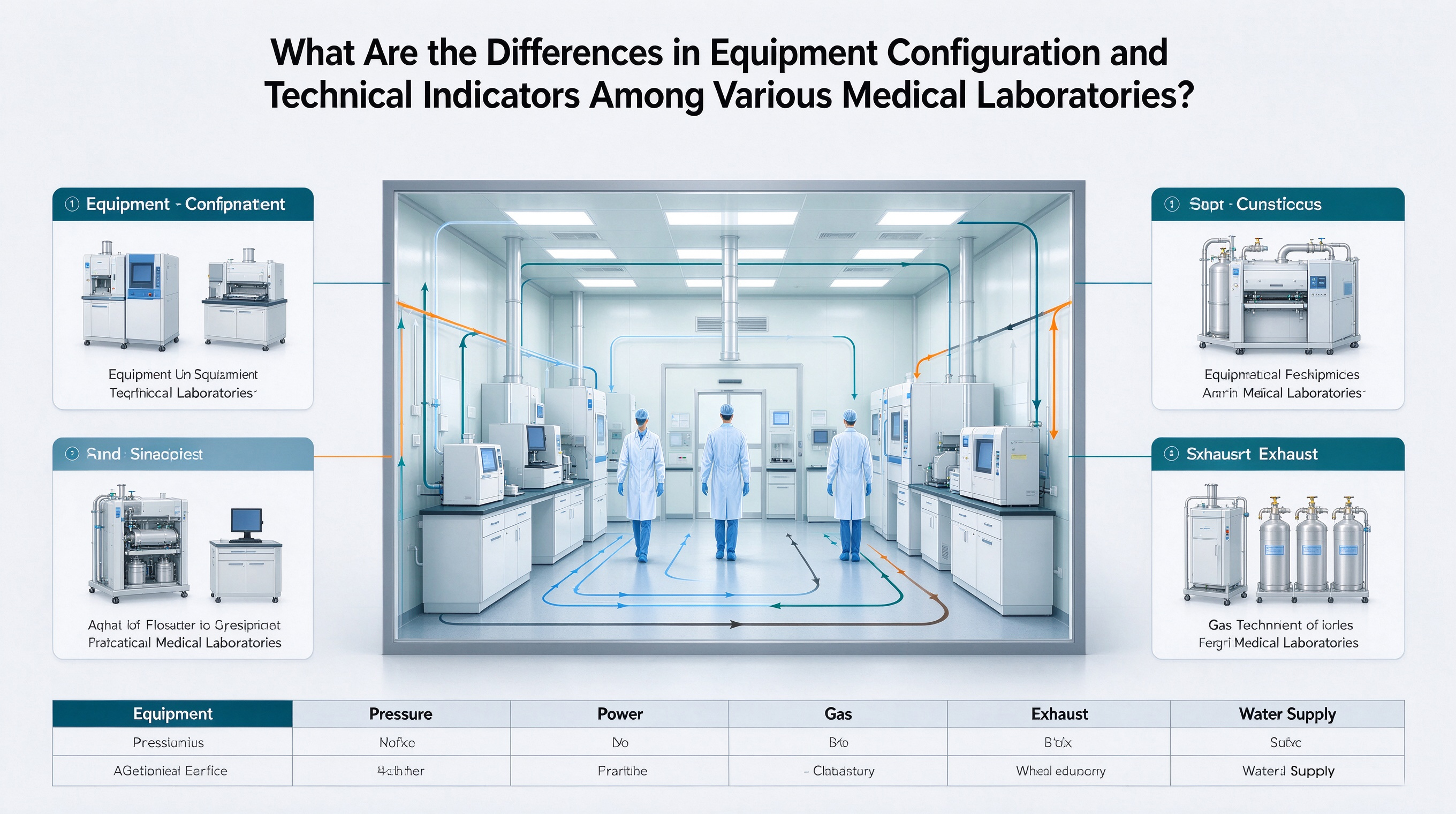
The above covers the equipment configuration requirements of medical laboratories. Besides, we need to learn the technical indicators of clean medical laboratories, including pressure status between different experimental units, power distribution, gas supply, exhaust air, air supply, water supply and drainage requirements for lab instruments.
Biosafety Laboratory
The design must fully assess the hazard level of biological agents. Select protective equipment, design corresponding protection facilities, and choose proper architecture, structure, HVAC, water supply & drainage, power distribution and automatic control systems according to different hazard levels.
Clean Medical Laboratory
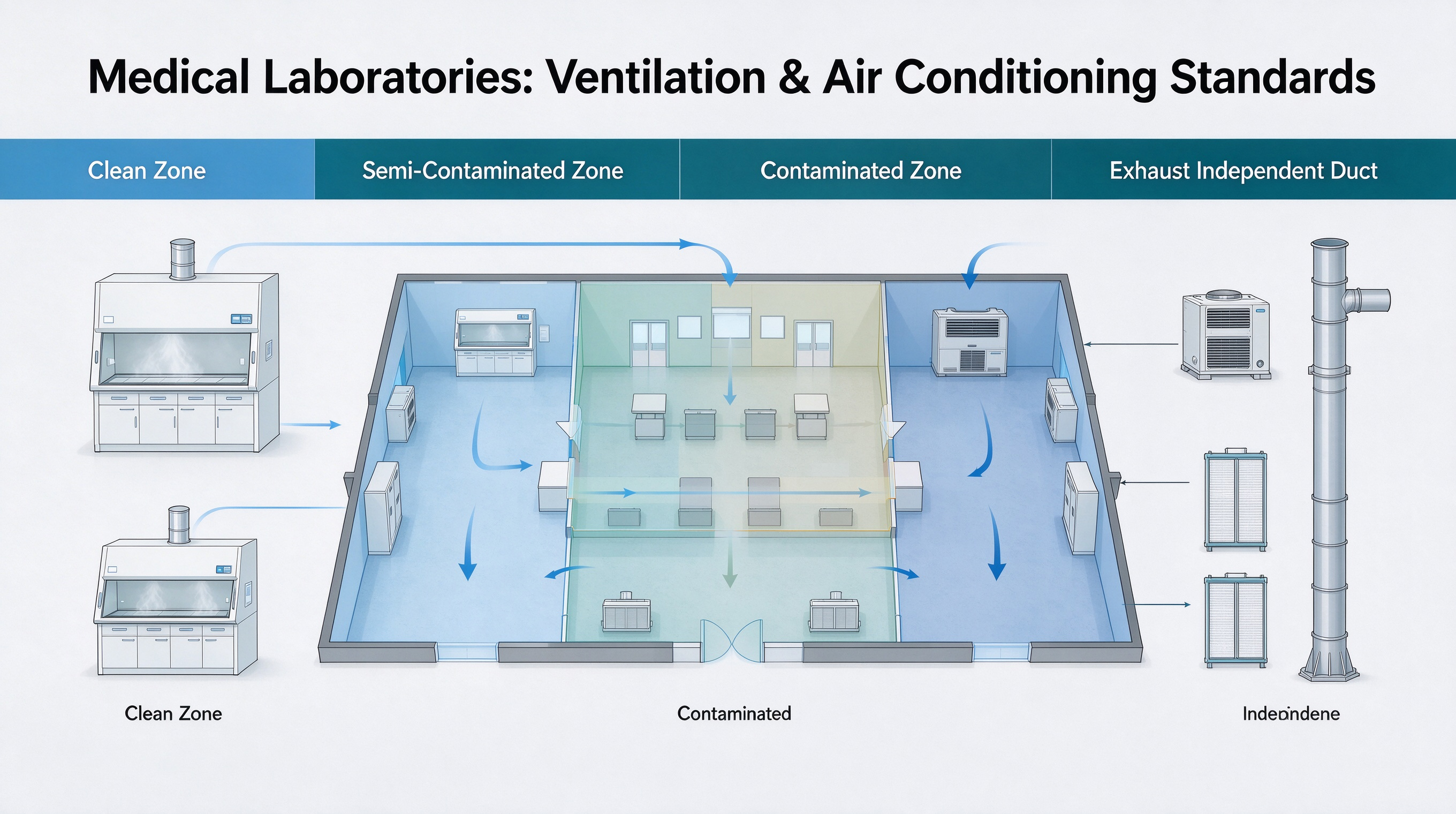
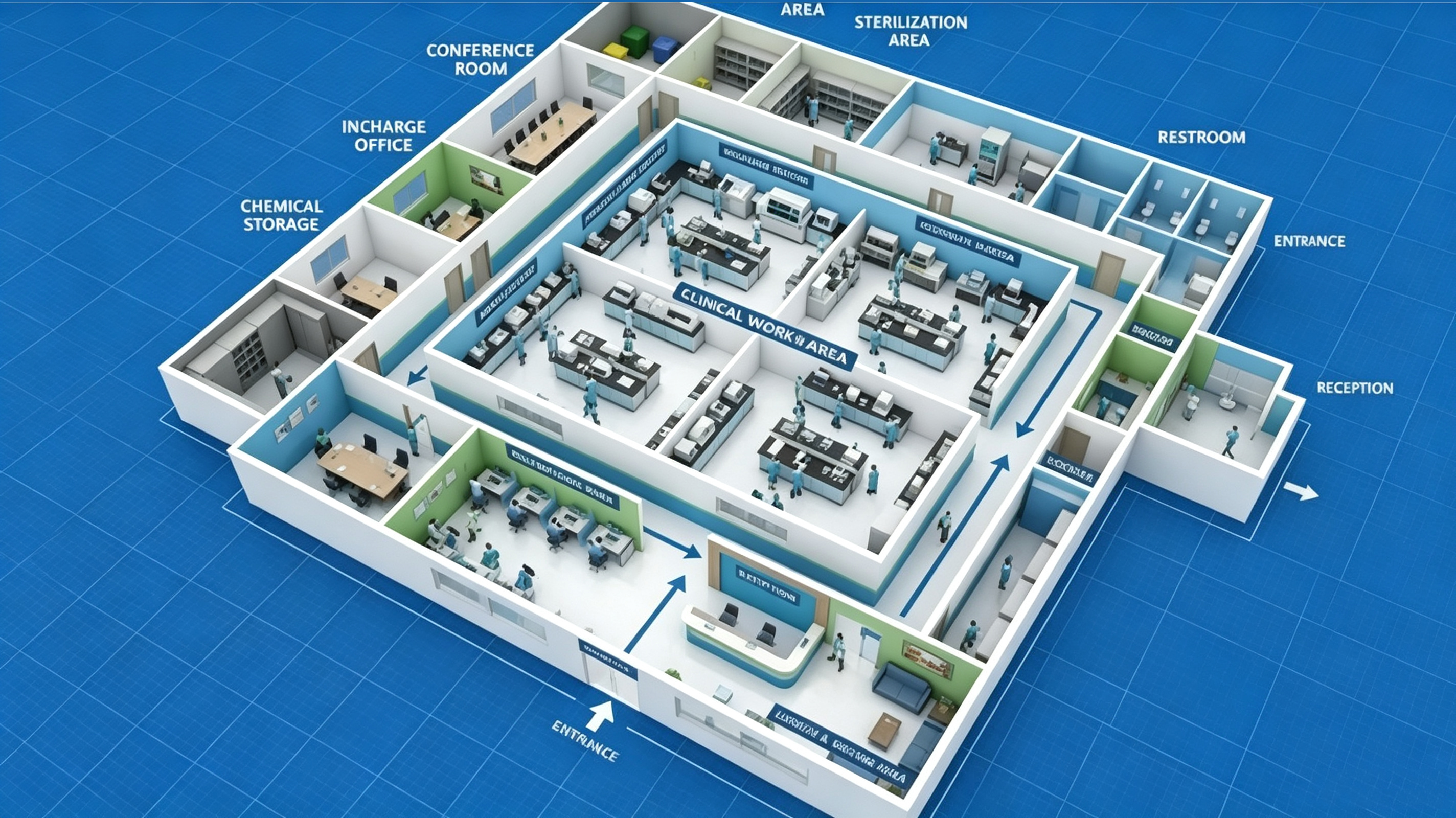
Three flow routes shall be well designed: personnel flow, clean material flow and contaminated waste flow. Separate personnel flow and material flow as much as possible. Specifically, entrances for clean supplies, exits for contaminated waste and personnel access should be set independently. Pass boxes can replace material access doors in sites with limited building area.
Personnel access routes for BSL-3 and BSL-4 laboratories shall comply with air cleaning technology principles for pollution control and physical isolation.
Pass boxes used in sterile rooms, PCR laboratories and PET centers can be standard pass boxes equipped with UV disinfection lamps inside.
Pass boxes for biosafety laboratories are determined by laboratory biosafety level and installation location. Pass boxes connecting the experimental area to outside must have high sealing performance with built-in cleaning and disinfection functions. Standard pass boxes are acceptable for internal use within the experimental zone.