A Practical Guide to Prevent Project Failure, Budget Overrun and Validation Failure
Many modular cleanroom projects face problems such as unqualified cleanliness, difficult acceptance, budget overrun and later operation failure, most of which are caused by unreasonable early design. We have summarized 6 most common design mistakes in engineering practice to help customers avoid project risks and ensure stable and compliant operation of cleanrooms.
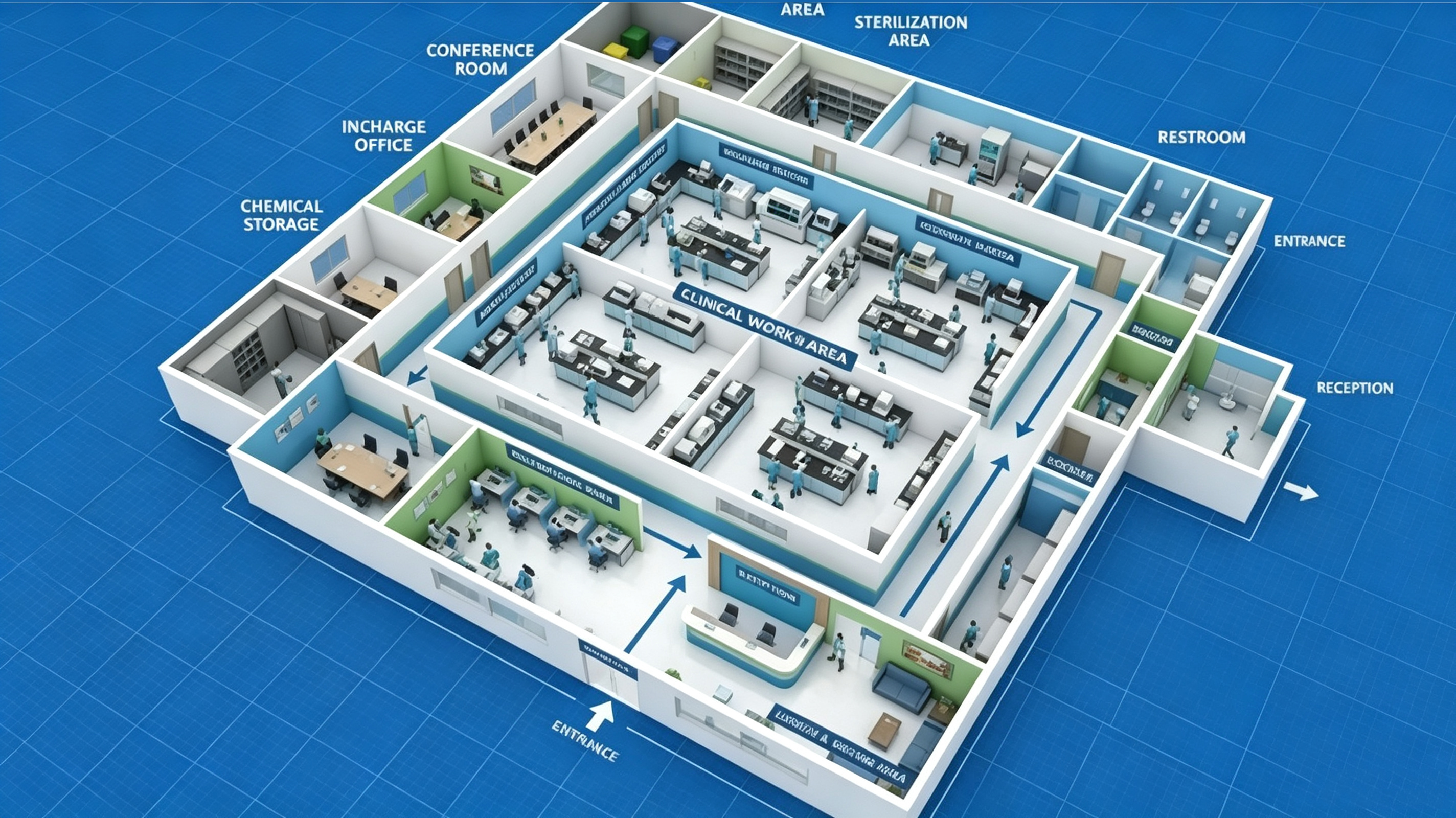
First, unreasonable functional layout. Many projects ignore the process logic and blindly pursue large space, resulting in chaotic partition of personnel and material passages, cross-contamination risks, and unsmooth production and experimental processes, which directly affect production efficiency and experimental accuracy.
Second, unreasonable differential pressure and airflow design. Without targeted airflow planning according to cleanliness grades, problems such as turbulent air flow, dust accumulation and reverse air flow are prone to occur, leading to failure of cleanroom cleanliness detection.
Third, incorrect selection of panel materials. Blindly choosing low-cost ordinary panels cannot meet the requirements of anti-corrosion, anti-static and high-temperature disinfection in special industries, resulting in panel deformation, dust falling and short service life in the later stage.
Fourth, insufficient configuration of purification equipment. Underconfiguring FFUs, air showers and fresh air systems to save costs will lead to insufficient indoor air renewal rate and poor purification effect, which cannot meet industry standard requirements.
Fifth, ignoring maintenance channel reservation. Too compact layout leaves no space for later equipment maintenance, replacement and pipeline inspection, increasing long-term operation and maintenance costs.
Sixth, neglected sealing details. Unstrict sealing of doors, windows, splicing gaps and pipeline openings will cause air leakage, resulting in unstable indoor cleanliness and failure of project validation and acceptance.
All the above mistakes can be avoided through professional pre-design and scheme optimization. A standardized and targeted design scheme is the premise of ensuring the long-term stable operation of modular cleanrooms.